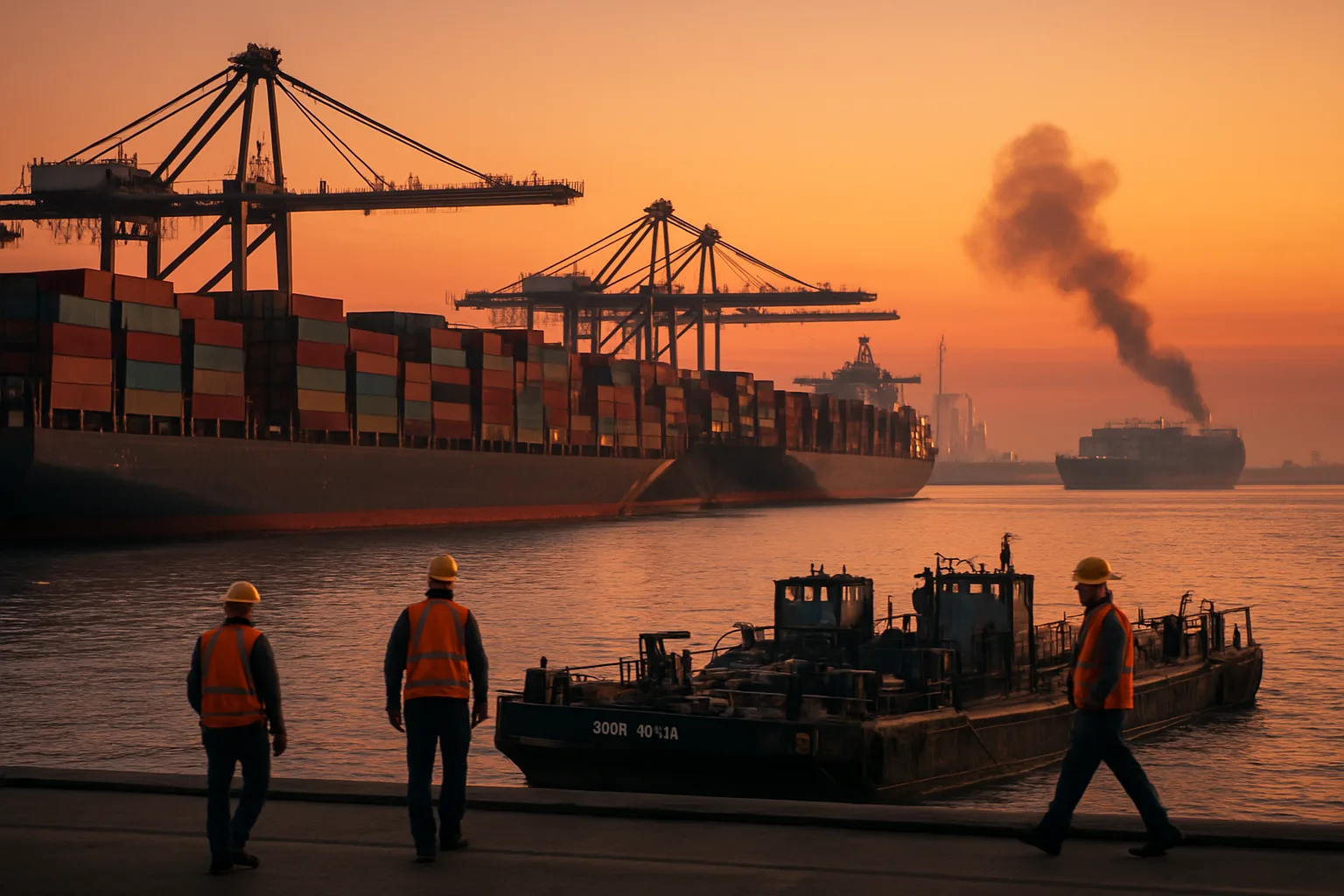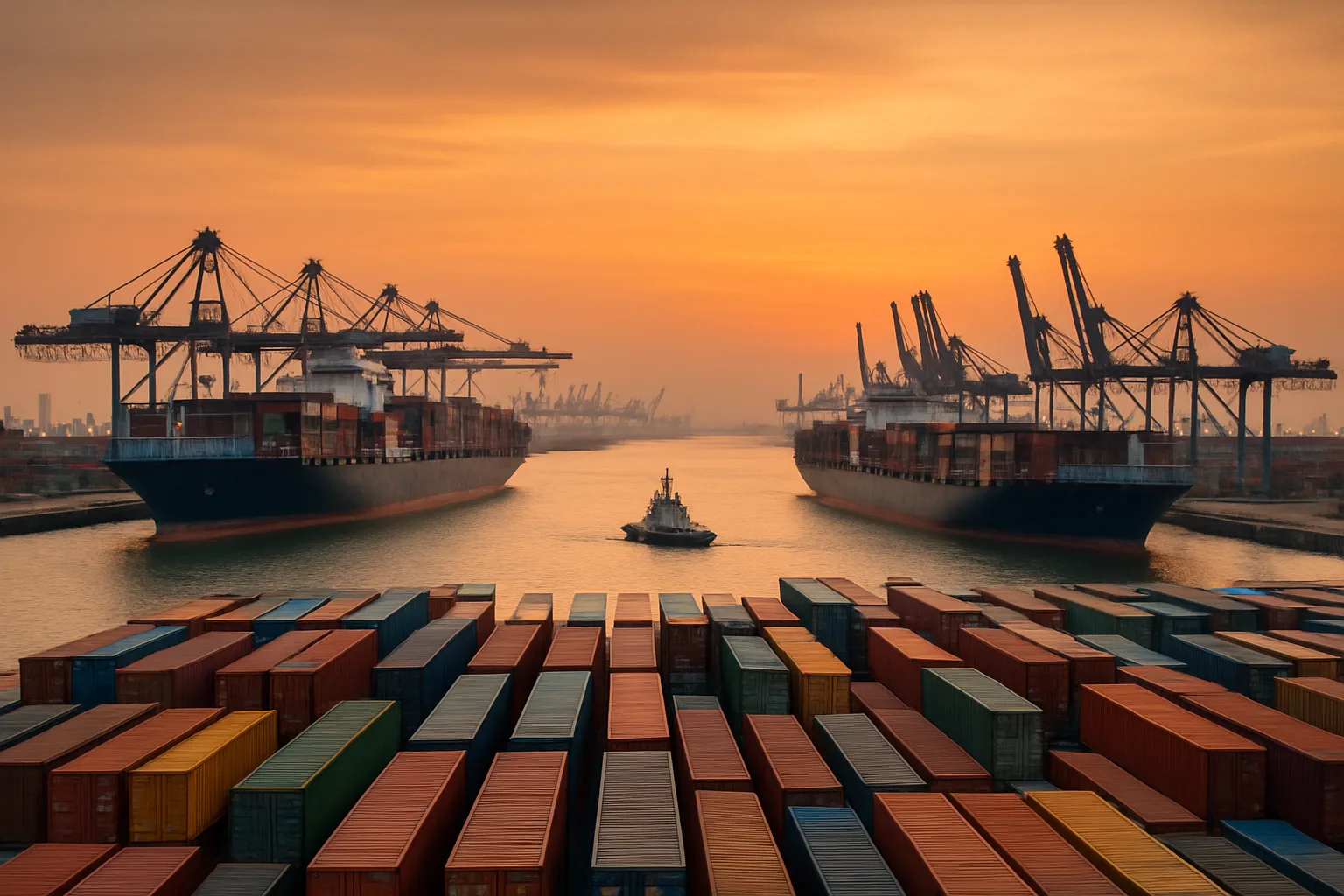
Global container freight rates have climbed sharply since late winter, with the Freightos Baltic Index (FBX) showing roughly a 130% increase in the global spot benchmark since February, marking one of the most abrupt reversals in ocean freight pricing in recent months.
The rebound has rippled through global supply chains, prompting carriers to tweak networks, shippers to rush to contract capacity and retailers and manufacturers to reassess inventory strategies as higher shipping costs amplify input prices.
What pushed rates higher
Industry analysts and shipping executives point to a confluence of demand and supply-side factors. On the demand side, a resurgence in consumer and industrial purchases, particularly for discretionary and seasonal goods, has swollen container volumes on key east‑west trades.
On the supply side, the industry continues to wrestle with persistent port congestion, equipment imbalances — notably a shortage of empty containers where they are needed — and operational disruption from blanked sailings and altered sailing schedules.
Security developments in the Red Sea have been a more recent and acute driver. Since late 2023, attacks on commercial vessels in the Red Sea and nearby waters prompted many carriers to suspend transits through the Suez route and reroute ships around the Cape of Good Hope. The longer voyages add sailing days, bunker fuel consumption and berth slot displacement, reducing effective network capacity and raising per‑box costs.
“Rerouting away from the Suez increases voyage times by days to weeks depending on the service and reduces the fleet’s weekly capacity, tightening the market and supporting higher spot rates,” shipping analysts said.
Carriers respond, but capacity remains tight
Ocean carriers have reacted by revising schedules, reinstating previously cut sailings on some corridors and optimising vessel deployment. Those moves have provided some relief on the most congested lanes, but the additional time at sea from longer routings and slower steaming practices to manage fuel costs have limited the capacity headroom.
Blank sailings — when carriers cancel a scheduled voyage to rebalance supply and demand — have shifted from the mass cancellations seen during the pandemic peak to more selective use as carriers seek to protect freight yields. The result is a tighter spot market that can spike quickly when demand surges, industry executives said.
Carriers that have contracted a portion of their capacity on long‑term contracts continue to earn steadier revenue, but the strong spot market has allowed some carriers to recapture margin lost during the trough. Freight forwarders report customers scrambling to secure tonnage at fixed rates amid fears that spot prices could climb further.
Impact on shippers and end markets
Higher freight costs are being felt most acutely by importers of consumer goods and components that rely on just‑in‑time inventory models. Retailers report increased landed costs for finished goods, while manufacturers face higher input costs for imported components, logistics providers and customs agents said.
Some importers are shifting purchasing patterns — placing orders earlier, consolidating shipments, or switching to air freight for time‑sensitive goods despite the higher cost — while others are negotiating longer contract periods with carriers and forwarders to secure predictable pricing.
Economists caution that the pass‑through from logistics cost rises to consumer prices depends on the sector and country, but where transport and distribution make up a meaningful share of final prices, consumers may see higher shelf prices in the coming months.
Policy and industry responses
Governments and port authorities have focused on measures to ease bottlenecks, from extended gate hours and streamlined customs processing to incentives for faster container returns. However, these measures address operational friction rather than the structural issues of fleet deployment and route disruption that underpin recent cost rises.
Industry bodies and large liner companies have called for coordinated efforts to protect shipping lanes and ensure safe passage. Shipping lines have also adapted contractual practices, including more detailed fuel and security surcharges, to reflect the higher costs associated with rerouted sailings and volatile bunker prices.
“The market is reacting to a concentrated set of disruptions on top of an underlying rebalancing of demand and supply,” a logistics industry expert said, describing the current phase as one of elevated volatility rather than a sustained new price plateau.
Outlook: volatile, not necessarily structural
Analysts expect volatility to remain elevated into the near term. Much depends on how long security risks in key maritime chokepoints persist, whether port congestion eases, and how durable the recent increase in demand proves to be.
If rerouting remains widespread and peak seasonal demand recurs, spot rates could experience further spikes. Conversely, if security stabilises and carriers restore services through shorter routes, freight costs could moderate, particularly as carriers add more sailings and reposition containers.
For corporate treasuries, procurement teams and freight buyers, the current environment is likely to reinforce a shift toward a mix of contracted and spot arrangements, hedging tactics and greater emphasis on supply‑chain resilience.
The surge in container freight rates underlines the continuing sensitivity of global trade to a limited number of chokepoints and operational vulnerabilities. Even as overall global trade volumes recover, concentrated disruptions can quickly tighten capacity and transmit higher costs through international value chains.
What to watch next
Key indicators to monitor include spot rate indices, carrier schedule notices for rerouting or capacity changes, port congestion metrics and geopolitical developments affecting major trade routes. Together these signals will determine whether the recent jump in freight costs marks a short, sharp episode or a more persistent shift in the economics of container shipping.
Sources & further reading