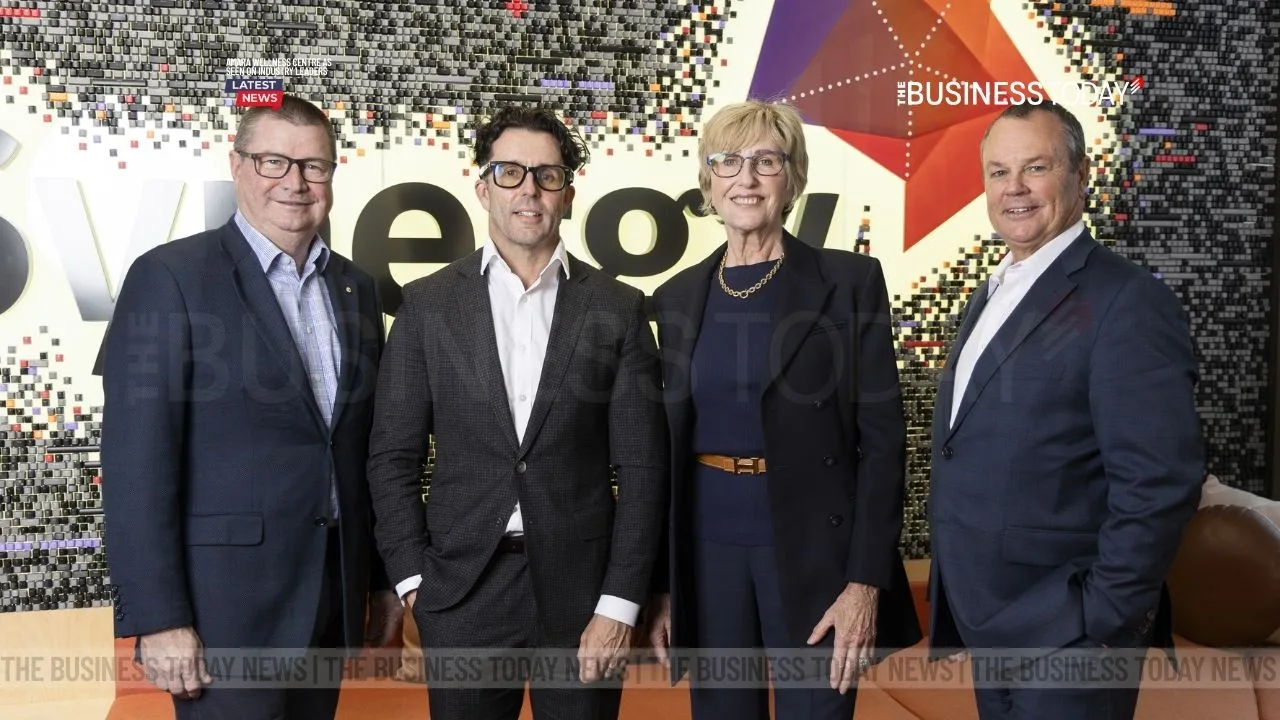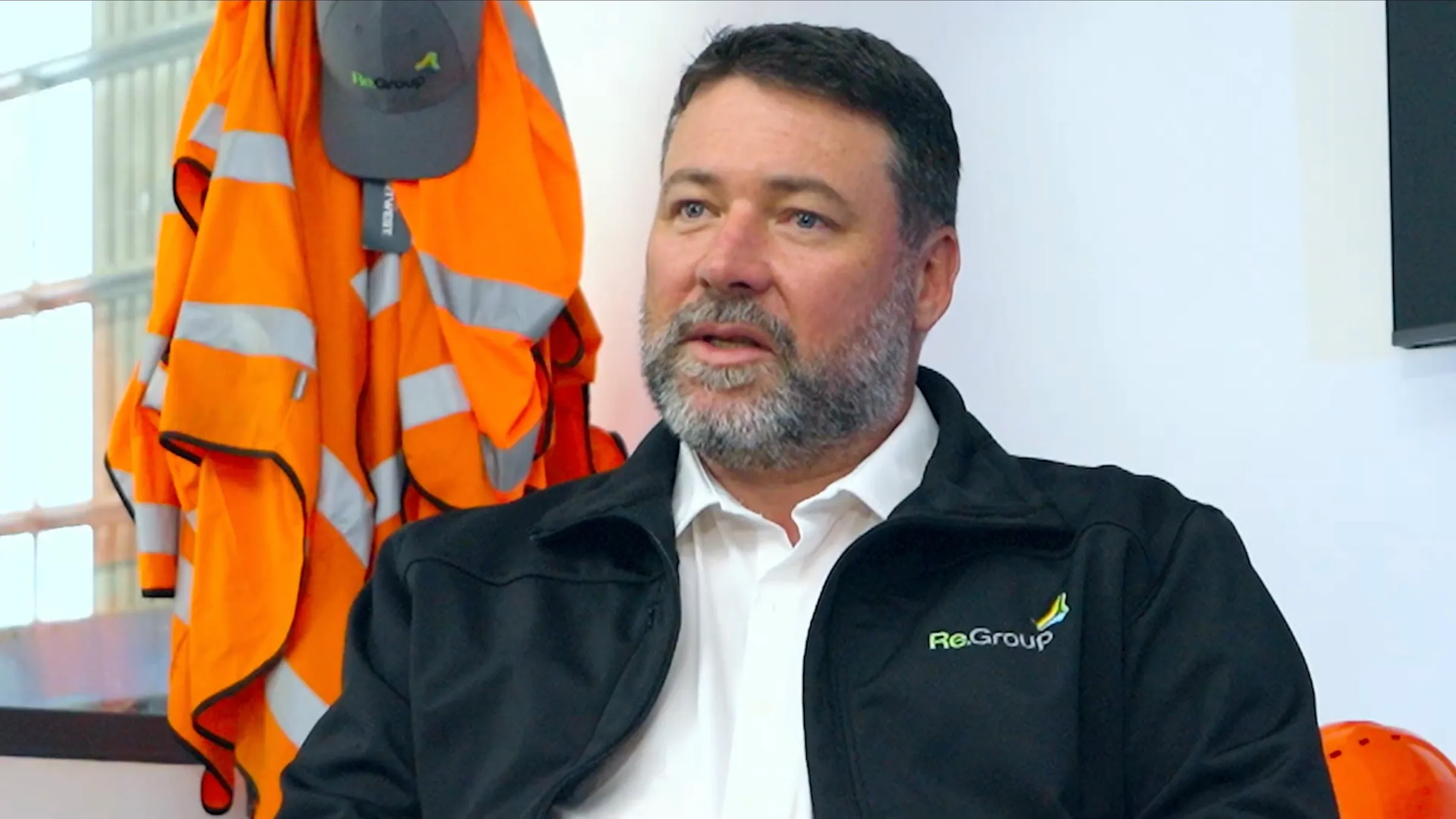
Re.Group, the Australian recycling and resource recovery company, is set to feature on the business-profile program Industry Leaders in November, with senior executives outlining the group’s growth plans amid a fast-changing national policy landscape for waste and materials. The episode includes insights from chief development officer Garth Lamb, chief operating officer Komal Singh and co-founder and managing director David Singh.
A timely profile as policy shifts reshape waste markets
The scheduled broadcast comes as Australia moves to tighten standards and accelerate recycling, guided by national and state targets that emphasise higher recovery rates, less contamination and stronger markets for recycled content. Policymakers have implemented staged restrictions on the export of unprocessed waste streams and called on industry to expand domestic reprocessing capacity, from plastics and paper to organics.
Companies operating in municipal and commercial recycling face rising expectations from councils, brand owners and regulators to deliver cleaner outputs and a broader suite of recovered commodities. For operators like Re.Group, that has meant investment in materials-recovery technology, partnering with local governments, and working with manufacturers to build reliable demand for recycled inputs.
Against that backdrop, the Industry Leaders segment is expected to examine how Re.Group positions itself in a market increasingly shaped by procurement rules favouring recycled content, landfill levies that alter the economics of disposal, and household programs such as container deposits and food-and-garden organics collections.
Who’s on screen and what they bring
The episode features three of the company’s senior leaders, each representing a different vector of Re.Group’s strategy and operating model:
Chief development officer Garth Lamb, a long-standing advocate for resource recovery, is expected to discuss the investment case for modern sorting infrastructure and the conditions required to scale new end-markets. Observers anticipate a focus on contamination control, data-led operations and partnerships that pool risk for new projects.
Chief operating officer Komal Singh is set to outline day-to-day execution across a portfolio of facilities that process municipal kerbside materials and other streams. That remit typically spans production stability, workforce skills in high-throughput environments, vendor management and safety—all critical when plants integrate more automation and handle increasingly complex material mixes.
Co-founder and managing director David Singh is likely to address the group’s origin story, governance and capital allocation priorities, as well as the company’s approach to bidding for council contracts and working with brand owners on circularity commitments. For viewers, the founder perspective often provides the clearest read on how a mid-sized operator plans to compete with multinationals, respond to policy changes and finance growth.
While Industry Leaders typically focuses on leadership narratives, the producers often weave in operational footage and case studies, offering a ground-level view of how facilities run, where bottlenecks occur and which innovations are delivering measurable results.
Investment, innovation and the operating frontier
Recycling economics are in flux, with commodity prices for recovered paper, metals and some plastics moving through sharp cycles over recent years. Operators have had to balance capital spending on advanced sorting—optical detection, robotics, AI-enabled quality control—against that volatility, while also responding to tighter product specifications from downstream buyers.
Industry analysts say that the most resilient operators are those building diversified revenue—mixing municipal contracts with commercial and industrial streams—while developing reliable outlets for outputs. That often involves working with manufacturers on recycled-content trials, ensuring a steady draw for bales of PET, HDPE or fibre, and, where possible, on-shoring value-added reprocessing to reduce exposure to export markets.
The forthcoming Industry Leaders profile is expected to show how Re.Group assesses those trade-offs. Viewers can anticipate discussion of the following themes:
- How data and real-time analytics inform plant performance and investment decisions.
- The operational implications of organics diversion targets, including contamination mitigation and education campaigns.
- The role of partnerships—joint ventures with councils, collaborations with packaging producers, and relationships with technology vendors.
- Workforce strategy as facilities integrate more automation, with an emphasis on training, safety and career pathways in regions outside Australia’s largest cities.
The policy context: targets and compliance tighten
Australia’s policy framework for waste and resource recovery has set ambitious goals for this decade, including higher national resource recovery rates and reductions in the volume of waste sent to landfill. Governments have also moved to strengthen product stewardship, encourage recycled content in procurement and phase in more consistent bin systems.
For operators, compliance is not just about licensing and reporting. It touches commercial realities: contracts are increasingly performance-based, contamination thresholds are stricter, and councils face budget constraints even as they seek better environmental outcomes. That combination can push companies to develop new service models—such as risk-sharing arrangements on commodity pricing—or to invest in public education that reduces inbound contamination and improves yield.
Companies like Re.Group that serve multiple jurisdictions must navigate a patchwork of state levy rates, grants programs and infrastructure priorities. The Industry Leaders segment is expected to explore how the company weighs those variables when prioritising new facilities and expansions, and how its leadership anticipates shifts in demand for different recyclables as packaging and procurement standards evolve.
Competition, consolidation and the mid-market operator
Australia’s waste and recycling sector features global heavyweights and large domestic incumbents alongside a long tail of specialists and regional players. Mid-market operators must balance scale with agility: big enough to win long-term council contracts and finance plant upgrades, yet flexible enough to tailor services to local conditions.
Re.Group’s leadership is expected to address where the company sits on that spectrum and how it differentiates itself—from targeted technological upgrades to customer relationships that emphasise transparency on contamination, bale quality and downstream buyers. Viewers can also expect commentary on consolidation trends in the sector and what that means for competition and innovation.
What viewers can expect to learn
Industry Leaders typically draws an audience of executives, policymakers and students of management who want to understand how leaders make decisions under constraint. In the Re.Group episode, viewers are likely to see:
How capital is allocated to new facilities or retrofits, and how those investments are underwritten.
The metrics that matter on the plant floor—throughput, purity, uptime—and how operators drive continuous improvement.
The intersection of leadership and community engagement, including how companies explain service changes to households and collaborate with councils on education campaigns.
The outlook for circular-economy job creation, including skilled roles in electrical, mechanical and data disciplines that support increasingly automated facilities.
While the program centres on Re.Group’s own journey, the broader insights—about scaling infrastructure, managing risk and aligning with policy—are likely to resonate across Australia’s circular-economy ecosystem.
Broadcast timing and access
The Re.Group episode is slated to air in November. Industry Leaders typically makes segments available via its TV broadcast and digital platforms after initial screening. Exact dates and broadcast details are expected to be confirmed closer to release through the program’s official channels.
For viewers tracking how the circular economy is moving from policy to practice, the profile offers a timely look at one operator’s strategy in a sector where execution, technology and community engagement increasingly determine who wins contracts—and who delivers on Australia’s recycling ambitions.
Sources & further reading